

Why Skill-Based Karate Works for Different Types of Learners
Every child learns a little differently, and homeschool families often see this more clearly than most. Some children move quickly and are ready to jump in, figuring things out as they go. Others take more time, watching first and wanting to understand before they begin. Some repeat something easily, while others need a few extra tries before they feel comfortable enough to continue. These differences are natural, but they can become more noticeable when a child is placed in an environment that does not match how they learn.
Parents often try a variety of activities, hoping one will feel like the right fit. Sometimes it does, and a child settles in with ease. Other times, something feels off in a way that is harder to define. A child may lose focus, hang back instead of joining in, or seem unsure even when they are capable. It can be confusing, especially when you know your child is able to learn and grow. In many cases, the issue is not the child. It is the environment around them.
Some activities move quickly and expect children to keep up. Others rely on constant change to hold attention. While that approach works well for some children, it can make it difficult for others to stay engaged. When a child is trying to keep up with something that changes too quickly or feels unpredictable, their attention shifts away from learning and toward simply managing the situation.
What many children respond to is something steadier. Clear expectations, a consistent routine, and the opportunity to revisit familiar work provide a sense of stability. When children know what to expect, they are able to focus more fully on what they are doing rather than trying to figure out what comes next.
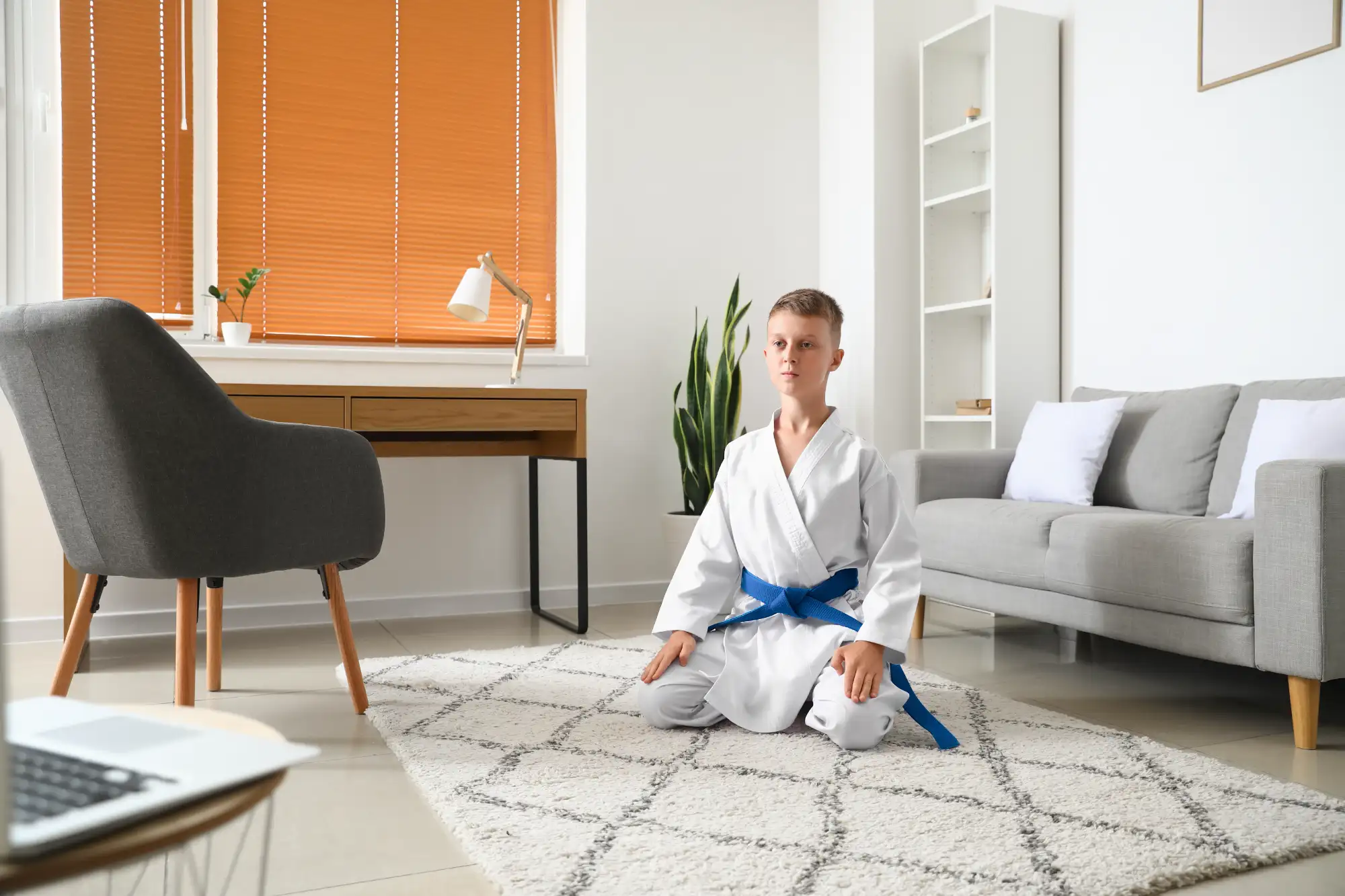
This is where karate often stands apart. A skill-based karate class follows a consistent structure that does not rely on constant variation. Students work with familiar movements and build on them over time. The class has a rhythm that becomes recognizable, which helps children settle into the experience. Because the structure remains steady, each child is able to engage with the same material in a way that fits their pace.
At Great Start Karate, our live, online karate classes provide this structure, giving homeschoolers a clear path to stay engaged and continue developing at their own pace.
A child who tends to rush is guided toward slowing down and paying closer attention. A child who is more cautious is given the space to step in gradually without feeling left behind. A child who struggles with focus is able to return to a clear pattern, which supports their ability to stay engaged. Each child is participating in the same class, but the experience meets them where they are.
I remember a student named Tanner who had a hard time staying engaged when something required more focus. He would start, then quickly shift his attention elsewhere, especially if the movement didn’t come easily.
What stood out wasn’t the behavior itself, but how it changed once he was working within a consistent class structure. The expectations stayed the same, the pace didn’t rush him, and he always had a clear place to return to.
He began to remain involved for longer stretches. Not perfectly, and not all at once, but enough to notice a difference. The class didn’t adjust to him, and he didn’t need it to. The steadiness of the environment gave him something he could work within.
Over time, parents often begin to notice small but meaningful changes. A child who used to drift away from an activity remains engaged for longer periods. A child who hesitated begins to try more readily. A child who felt unsure starts to look more comfortable and capable. These changes are not dramatic, and they do not happen all at once, but they are consistent and noticeable.
In the right environment, the difference between children begins to matter less. Each child remains part of the same work, building familiarity through repetition while continuing at their own pace. Instead of trying to keep up or stepping back, they stay involved in what is happening and continue working in a way that fits how they learn.
Karate often becomes a place where this is easier to see. The structure remains consistent, the expectations are clear, and the work does not shift from one moment to the next. Each child continues within that same framework, developing at their own pace while still being part of the class. What begins to change is not just the movement, but how comfortable they become participating and continuing.