

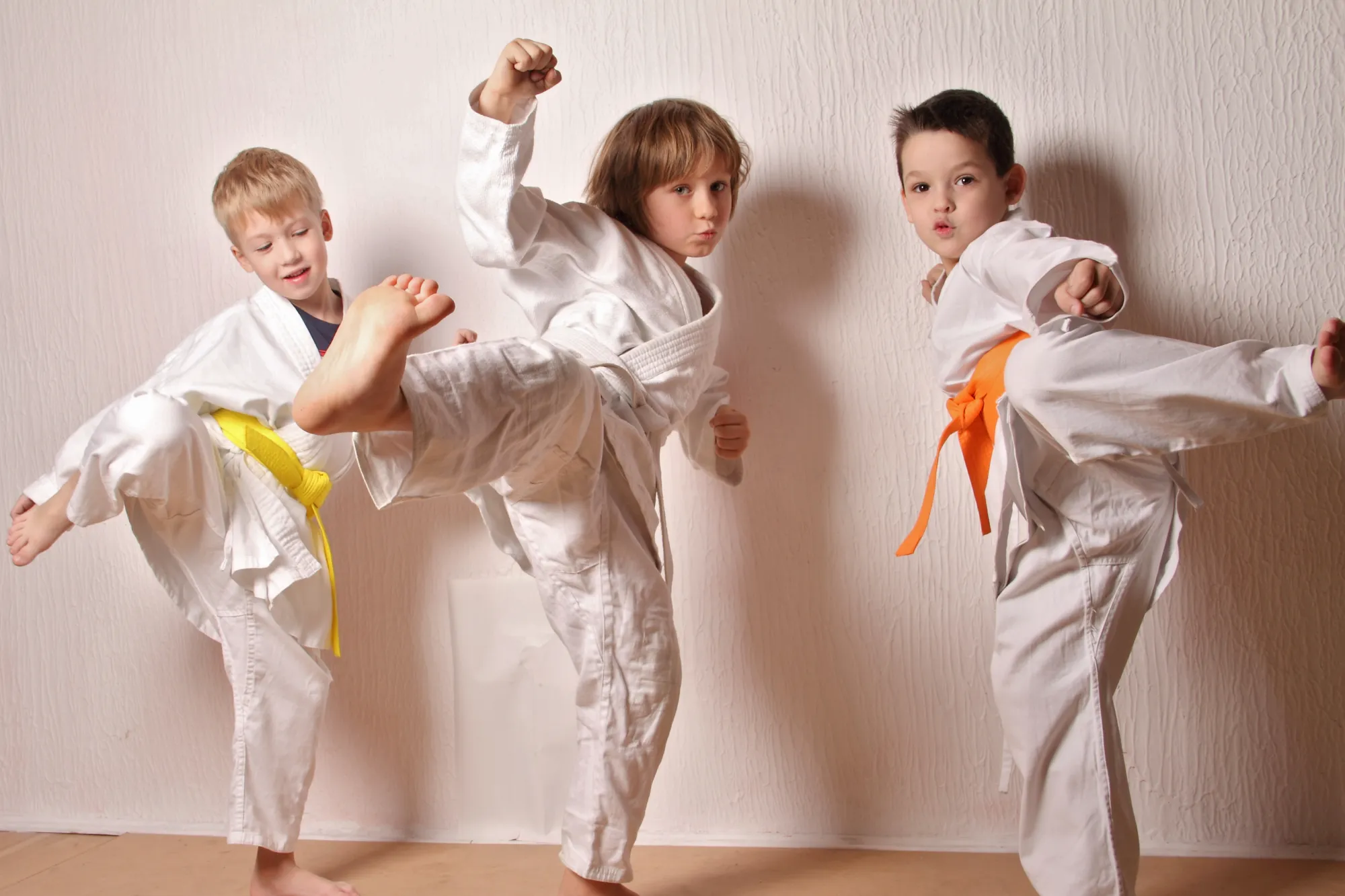
Fun, Friendship, and Growth Through Karate
How guided, skill-based practice makes learning fun for children
People are sometimes surprised by how much children enjoy karate because karate places such a strong emphasis on structure, repetition, focus, and discipline. Yet for many children, it quickly becomes one of the most enjoyable parts of their week.
If you watch a live online karate class, you immediately notice how engaged children are. They are focused, yet also laughing, moving, participating, and genuinely enjoying the experience. A discipline built on structure and repetition becomes something they look forward to every week.
At Great Start Karate, fun is intentionally woven throughout the learning experience. Many of the drills and activities are intentionally designed to keep children engaged and excited while strengthening coordination, focus, memory, and overall skill development.
Through our themed Zoom screens, children practice karate while virtually exploring different countries and learning fun cultural facts connected to each destination.
Children also enjoy having new goals and opportunities to challenge themselves along the way. Karate is built around progression, and each new level introduces new skills, greater responsibility, and exciting milestones to work toward. Many children become deeply motivated by the experience of learning, improving, and advancing step by step.
Traditional martial arts tools like the bo staff, nunchaku, and tonfa add an exciting new dimension to training while continuing to build coordination, focus, and control. Many children look forward to reaching these higher levels as they continue progressing through their training.
That same sense of connection continues beyond regular classes through our Game Day events, hour-long social gatherings where children come together for themed activities, games, and challenges designed to build camaraderie, laughter, and friendship. Some Game Days include Hidden Pet Club, where children introduce and showcase their pets, while others feature Star Wars battles, scavenger hunts, Minecraft-themed challenges, and costume nights. Many children look forward to these events just as much as class itself because they create another opportunity to interact socially and share the experience of training together.
For the highest-ranking students, the end of class often shifts into leadership discussions centered around character, responsibility, and real-world thinking. Students might talk about how a strong leader would treat employees, handle challenges, support a team, or lead a business with integrity and respect. These conversations encourage students to begin seeing themselves not only as martial artists, but as capable future leaders.
Children enjoy experiences that allow them to feel capable. They enjoy challenges when they exist in an encouraging environment, and they love discovering they can do things that once felt difficult.
There is a moment that happens often in martial arts classes. A child has been practicing a movement that feels awkward or difficult. Their balance is inconsistent. Their timing feels off. They are still learning how to coordinate the movement the way they intend. Then suddenly, after repetition and adjustment, something clicks. Their kick snaps with control. Their stance steadies. Their movement becomes smoother and more intentional.
You can often see the “aha!” moment right on their face.
Children begin to understand that their bodies can be trained. Through practice, movement becomes stronger, more coordinated, and more controlled. They begin trusting themselves because they can physically feel their own improvement happening.
This is where body confidence begins.
Not confidence built through praise alone, but confidence built through experience. Children begin standing taller. They participate more freely. They feel proud of what their bodies can do, and that feeling is deeply motivating.
As children experience progress for themselves, the work itself becomes enjoyable. They love finally landing a kick they have been practicing for weeks. They love mastering a sequence that once felt confusing. They laugh with friends while practicing combinations. They become excited about earning stripes and learning new skills because those accomplishments feel real to them.
Many children even begin practicing at home without being asked. They want to show parents the kick they finally mastered or the pattern they can now remember from beginning to end. The excitement comes from feeling themselves improve. What once felt difficult begins to feel possible, and children genuinely enjoy that experience.
Researchers sometimes refer to this as “mastery motivation,” the internal drive children develop to keep improving a skill. Studies on movement and active play show that children become more motivated when physical challenges feel enjoyable, supportive, and appropriately matched to their level. Research also shows that children sustain attention longer and remain more engaged when learning feels enjoyable and interactive. Joy, curiosity, and active participation help children stay involved in the learning process.
This is also why the emotional tone of the environment matters so much.
Children quickly recognize whether the environment feels supportive or overly focused on performance and comparison. When the environment feels emotionally safe, children become much freer to try. Mistakes simply become part of the learning process. The instructor keeps the focus on participation, effort, and improvement while helping children stay focused on their own growth and participation.
As a result, challenge begins to feel exciting and rewarding. Children repeat combinations because they genuinely want to sharpen the movement. They practice forms again because mastering the sequence feels satisfying.
Kids are also highly aware of whether they are fully included in the experience. They know when they are sidelined, overlooked, or treated as less capable than other kids. In martial arts, every child participates. Every kid practices, improves, and progresses together. That consistency creates a very different emotional experience because kids feel involved, valued, and connected to the learning itself.
Karate is also unique in that children do not need natural athletic ability to begin. All learners can participate, improve, and experience success through guided, skill-based practice. Children begin to realize they are far more capable than they first believed.
Children enjoy movement most when it includes guidance, progression, and a clear sense of growth. Guided, skill-based PE gives children something meaningful to work toward, and that sense of progress is what keeps them engaged.
For many children, karate becomes far more than just another activity during the week. They look forward to class because they feel connected to the experience itself. They know their instructors notice their effort, celebrate their progress, and genuinely care about their growth. They remember the games, the laughter, the adventures, and the excitement of learning something new, but they also remember how it feels to be welcomed, encouraged, and fully included every time they log in.
Over time, the dojo begins to feel familiar and meaningful, a place where children know they can participate fully, keep improving, and enjoy the process along the way.
At Great Start Karate, we see these moments happen every day. Quiet students begin volunteering to demonstrate their techniques. Children who once struggled to stay focused become better listeners because they are interested, engaged, and excited to participate. Children who once held back begin stepping into challenges more willingly because they trust the environment surrounding them.
While parents may initially notice the kicks, forms, and belt progression, something deeper is taking shape beneath the surface. Children are developing patience, persistence, emotional steadiness, and the confidence that comes from experiencing themselves become more capable over time.
That is why karate can become so much fun for children. Inside the right environment, discipline becomes connected to encouragement, participation, progress, and meaningful challenge. Children are not just learning skills. They are experiencing the joy of becoming more capable.
Within the right environment, discipline creates the conditions for joy.