
Teaching Kids Respect Through Daily Practice
Many homeschool families are intentionally thinking about more than academics. Alongside reading and math, they are also paying attention to character, responsibility, emotional growth, and how children learn to navigate everyday life.
That is one reason the topic of respect matters so much.
Not surface-level politeness. Not forced obedience. Real respect.
The kind that shapes how children speak to family members, care for their belongings, respond during frustration, and carry themselves when no one is watching.
Like most important life skills, respect is not something children fully develop through lectures alone. Children learn it through daily experience, modeling, consistency, and practice over time.
That is one reason martial arts and homeschooling often fit together so naturally.
Children grow most consistently when the adults around them support the same expectations, language, and values across different environments.
Over time, that consistency begins shaping character.
Respect Has to Be Made Visible
One thing decades of teaching children makes very clear is that many life skills remain too abstract unless adults help make them visible.
Children hear phrases like:
“Be respectful.”
“Use good manners.”
“Respect your elders.”
But many children are still trying to figure out what those ideas actually look like in daily life.
What does respect sound like during a disagreement?
What does it look like when a sibling is frustrating?
What does it look like when a parent asks for help and a child does not feel like helping?
Children need examples they can practice.
At Great Start Karate, we spend a great deal of time helping children connect life skills to real-world behavior.
Respecting parents might mean responding the first time instead of arguing immediately. It might mean helping with responsibilities before being reminded repeatedly. It might mean learning how to speak honestly without becoming disrespectful.
Respecting siblings might mean using self-control during conflict, giving space when someone is upset, or learning how to encourage instead of criticize.
Respecting belongings might mean taking care of uniforms, cleaning up after class, or treating personal items carefully instead of carelessly tossing them aside.
Respecting the environment might mean picking up trash after an event or understanding that shared spaces deserve care too.
Respecting ourselves might mean practicing self-control, speaking honestly, following through when something feels difficult, and learning how to take care of both our bodies and emotions.
These lessons may seem small in the moment, but over time they shape how children move through the world.
Why Martial Arts Naturally Reinforces Respect
There is a reason martial arts has long been connected to character development.
The structure itself naturally creates opportunities to practice respect.
Students wait their turn.
They listen carefully.
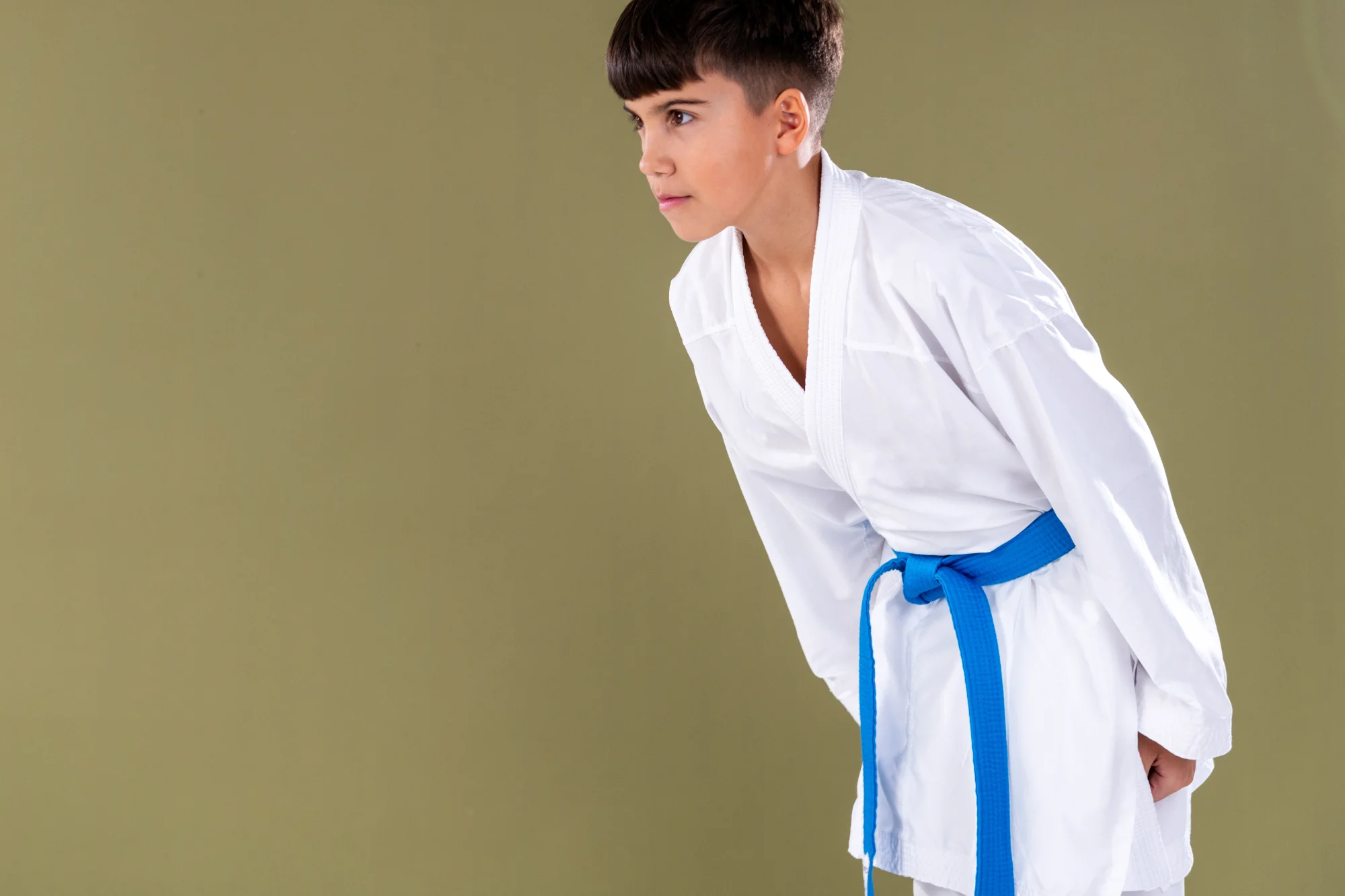
They bow.
They practice self-control.
They work through frustration without quitting.
But structure alone is not enough.
Children do not automatically absorb life skills simply because they participate in an activity. It is up to the teacher to help children understand how those skills apply beyond class.
That connection matters deeply.
At GSK, we intentionally explain how respect transfers into home life, friendships, learning, and responsibility. We help children understand that self-control is not just for karate drills. It affects how they respond when upset, disappointed, or corrected.
This is part of what makes skill-based physical education so valuable.
Physical education should be meaningful rather than just active.
Children need movement experiences that develop more than physical fitness. They need environments that help them practice emotional regulation, focus, perseverance, confidence, and responsibility in real time.
Historically, this was always part of physical education’s purpose.
PE was intended to help develop character alongside physical skill.
That philosophy sits at the center of PE With a Purpose.
Movement Helps Children Practice Emotional Regulation
One of the most overlooked parts of child development is how connected movement and emotional regulation really are.
Children are still learning how to manage frustration, impulses, disappointment, and self-control. Those skills do not develop all at once.
That is why movement can become such a powerful teaching tool.
During structured physical activity, children constantly practice regulating themselves. They wait. They listen. They adjust. They recover after mistakes. They try again when something feels difficult.
Movement is part of learning.
Children are not simply exercising during skill-based physical education. They are practicing how to focus, stay with discomfort, manage emotions, and continue improving over time.
This is one reason many homeschool families are drawn to intentional, skill-based activities. Home education often allows parents to take a more whole-child approach to growth.
Character, responsibility, communication, focus, emotional regulation, and perseverance are not treated as separate from learning. They become part of the learning process itself.
Why Consistency Matters So Much
Many parents become discouraged when growth feels inconsistent.
Children may show maturity one week and struggle the next. They may handle disappointment calmly one day and react emotionally the next.
But children build character the same way they build physical skills.
Through repetition.
This is one reason consistency matters more than intensity.
One dramatic lecture rarely changes long-term behavior. But small, repeated moments of guidance often do.
At GSK, children practice respectful habits every class. They greet instructors. They wait their turn. They encourage other students. They learn how to recover calmly after mistakes. They practice listening even when distracted or frustrated.
Over time, these patterns begin transferring into daily life.
Parents often notice children becoming more cooperative, more responsible, calmer during frustration, and more thoughtful in how they communicate.
These changes usually happen gradually.
But gradual growth is often the kind that lasts.
Respect and Confidence Grow Together
Sometimes confidence and respect are treated as opposites, as though confident children will automatically become arrogant.
But healthy confidence often supports respectful behavior.
Children who feel secure are usually more teachable. They are less defensive during correction. They are more willing to admit mistakes and adjust.
At Great Start Karate, confidence grows through visible progress.
Children learn a skill that once felt difficult. They improve balance, focus, coordination, and self-control. They begin experiencing themselves as capable.
That experience changes children internally.
Confidence grows when children see effort leading somewhere meaningful.
Children who feel capable often spend less energy protecting themselves through defiance, avoidance, or emotional outbursts.
This is one reason meaningful physical education matters so much.
Children need opportunities to experience growth physically, emotionally, and mentally.
Simple Ways to Reinforce Respect at Home
One of the encouraging realities about character development is that respect is usually built through small daily moments, not perfection.
A few simple practices can make a meaningful difference over time.
Model respectful communication inside the home. Children learn a great deal by watching how adults handle frustration, disagreement, and responsibility.
Give children opportunities to contribute meaningfully to family life. Responsibility helps children feel capable and connected.
Teach specific behaviors instead of vague labels. Instead of saying “Be respectful,” explain what respectful behavior looks like in that moment.
Recognize effort and improvement. Confidence grows through visible progress, especially when children begin noticing their own growth.
Keep expectations consistent. Children feel more secure when boundaries and values remain steady over time.
Most importantly, remember that character development is a long process.
Children are learning.
Adjusting.
Practicing.
Growing.
Just like physical skills, life skills develop gradually through repetition and guidance.
What We Are Really Building
Years from now, most children will not remember every drill they practiced or every technique they learned.
But they will remember how environments made them feel.
Whether adults believed in them.
Whether they felt emotionally safe.
Whether they learned how to recover after mistakes.
Whether they experienced themselves becoming more capable over time.
Those experiences shape identity.
At Great Start Karate, the goal is not simply to teach karate techniques. It is to help children build the habits, attitudes, and life skills that support strong character over time.
Respect is part of that process.
This is part of what we mean when we talk about a Meaningful Homeschool PE System.
Physical education becomes more than activity. It becomes a place where children practice responsibility, self-control, perseverance, confidence, and respect in ways that carry far beyond class itself.
And when parents and instructors reinforce those same values together, children benefit from something incredibly powerful:
Consistency.
The same life skills supported across home, learning, and movement.
That partnership helps children grow into capable, respectful, responsible people over time.