

How Children Learn Self-Control Through Practice
Every parent has experienced a moment when a child knew exactly what they should do and yet did something entirely different.
The child knows they should not interrupt. They know they should calm down. They know they should not say something hurtful when they are upset. Yet in the moment, that knowledge seems to disappear.
Why?
Part of the answer may be that knowing what to do and doing it are not always the same thing.
Most life skills work this way. A child can understand the importance of patience and still become impatient. They can understand the value of listening and still become distracted. They can understand the importance of self-control and still struggle to apply it when emotions begin to take over.
This is one reason self-control can be such a challenging skill to develop.
Knowing and Doing Are Different
Unlike many academic subjects, self-control is difficult to teach through explanation alone. A child can learn what self-control means. They can explain why it matters. They may even recognize situations in which they should use it.
The real challenge arrives in the moment itself.
Frustration appears. A mistake happens. Something feels unfair. Emotions begin to rise.
In those moments, children are not simply drawing upon knowledge. They are drawing upon habits that are still developing.
This may be one reason parents sometimes feel confused by their children’s behavior. A child may fully understand what they should do and still struggle to do it consistently. The gap between understanding and application is a normal part of learning many life skills.
A game does not go as hoped. A sibling says something upsetting. A child is asked to wait longer than they would like. Excitement becomes difficult to contain. Disappointment arrives unexpectedly.
These moments can be uncomfortable, yet they may also provide some of the most valuable opportunities for growth.
Why Self-Control Matters
Self-control helps children remain focused when distractions appear. It helps them work through frustration when learning becomes difficult. It helps them navigate disagreements, manage disappointment, and make thoughtful decisions when emotions begin to rise.
Many of the challenges children encounter are not problems of knowledge. They are challenges of response.
A child may know how to complete an assignment but feel frustrated enough to quit. They may know the correct answer but hesitate to try. They may know the appropriate response but struggle to apply it in the moment.
This is one reason self-control influences much more than behavior. It influences how children approach learning, relationships, challenges, and setbacks throughout childhood.
The goal is not to prevent children from experiencing frustration, disappointment, or strong emotions. Those experiences often create the conditions in which self-control can be developed. The important question is what children gradually learn to do when those emotions arise.
A Place to Practice
Perhaps this is one reason karate provides so many opportunities to develop self-control.
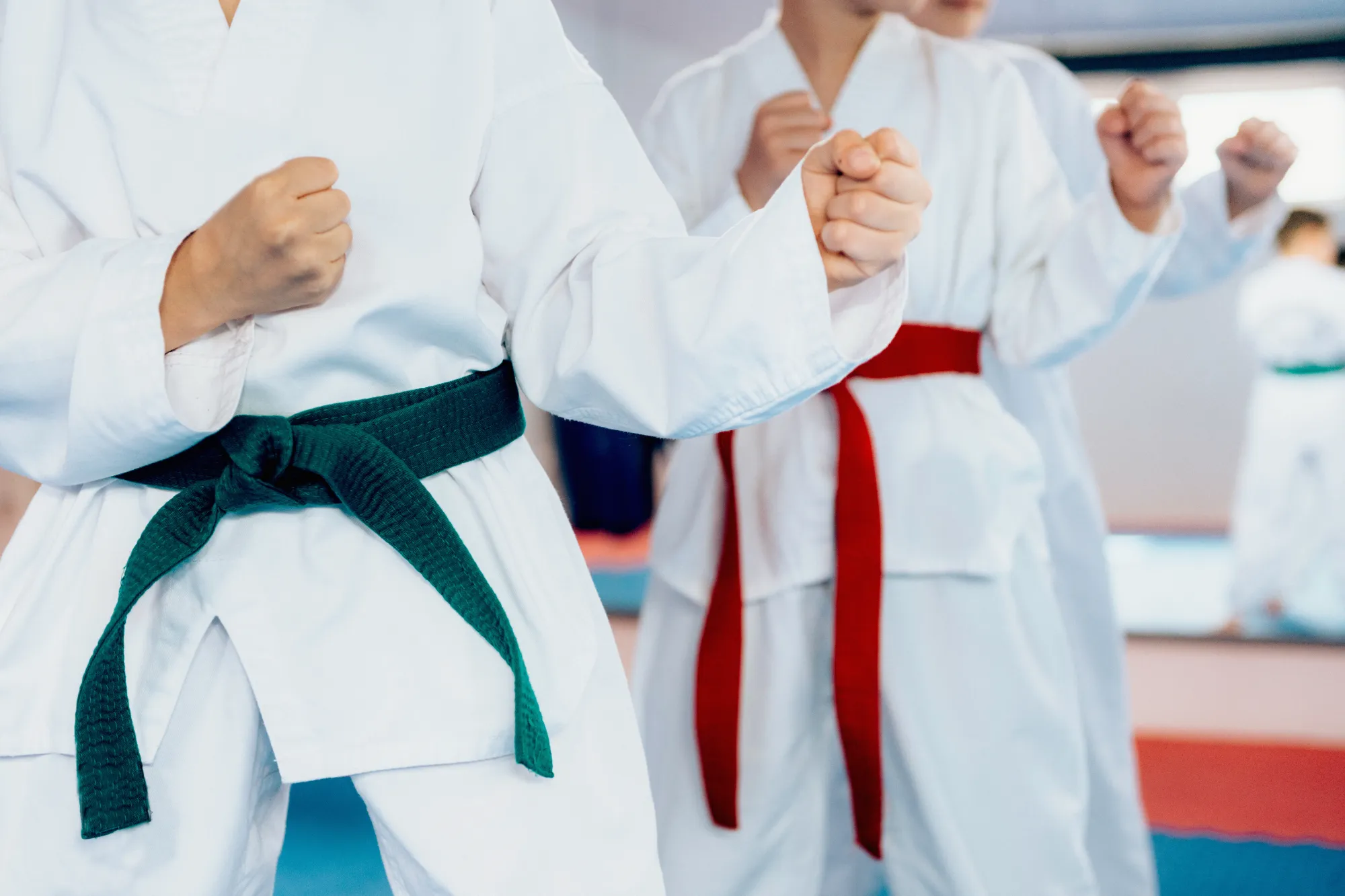
Every class asks students to manage attention, follow directions, work with others, and continue practicing when something does not go as planned. The physical techniques may be the most visible part of the lesson, but they are often accompanied by opportunities to strengthen important life skills as well.
Self-control rarely develops in a single defining moment.
A student loses balance during a kick and chooses to try again. A form does not go as planned, so the student starts over. A mistake creates frustration, yet practice continues.
These moments rarely attract much attention, yet they often represent meaningful progress.
At Great Start Karate, Self-Control is our life skill focus for June.
Throughout the month, students practice self-control during drills, discussions, games, and everyday class interactions. At the end of June, students earn their Control Stripe for placement on their karate belt or life skill tracker.
Focus Breathing
One way we intentionally practice this skill is through a simple exercise called Focus Breathing.
After warm-ups, students participate in Mat Chat, where we take a few moments to settle both mind and body before continuing class. Students close their eyes, reach their hands toward the sky while taking a deep breath in, and slowly bring their hands to their heart center while breathing out. The process is repeated three times.
The exercise itself is simple, yet many students are surprised by the effect.
A few slow breaths often help them settle their attention and prepare for the rest of class. More importantly, they begin experiencing something that can be difficult to learn through explanation alone: the realization that they can pause before reacting.
Children often experience emotions as something that simply happens to them. Over time, they begin to recognize that there is space between an emotion and a response. Within that space, choices become possible.
This is one reason practices such as Focus Breathing can be valuable. The goal is not merely relaxation. The goal is helping children become more aware of their own responses and discover that they have some influence over what happens next.
A Skill for Life
At the end of June, students will earn their Control Stripe.
More importantly, they will have spent an entire month developing a skill that can influence how they approach challenges, frustrations, and setbacks in everyday life.
Like many important qualities, self-control develops gradually. It grows through experience, repetition, and opportunities to apply it in everyday situations. Over time, children begin learning one of the most valuable lessons childhood can offer: while they cannot always control what happens around them, they can learn to choose how they respond.
Explore More
We invite you to explore additional articles in the Explore section of GreatStartKarate.com, where we share insights on physical education, life skills, confidence, and the experiences that help children grow into capable, confident learners.