

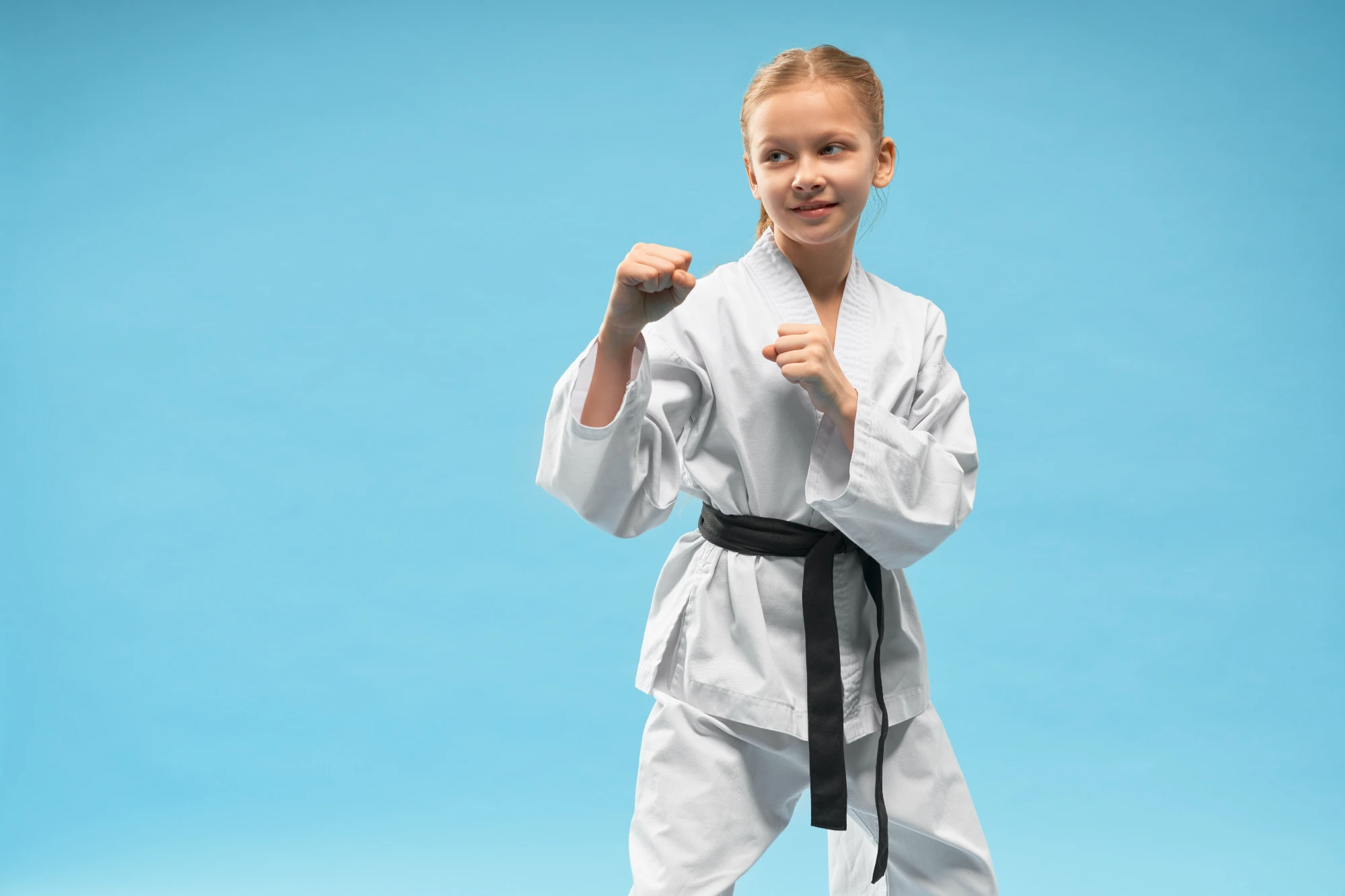
Why Leadership Matters in Karate
What is the connection between leadership and earning a black belt?
Many people think of karate as learning punches, kicks, blocks, and forms. Those skills are certainly an important part of martial arts training. They build coordination, balance, strength, and discipline. But karate also provides something equally valuable: opportunities for children to develop the qualities of effective leaders.
Leadership is not reserved for adults or people with titles. Children demonstrate leadership every day through the choices they make. They lead when they take responsibility for their actions, show respect to others, encourage a classmate, persevere through a challenge, or choose to do what is right even when no one is watching.
These qualities rarely develop by chance.
Just as children learn a front kick through guided instruction, practice, and feedback, leadership skills also develop through consistent opportunities to learn and apply them. Children need chances to make good decisions, solve problems, accept responsibility, and experience the satisfaction that comes from doing difficult things well.
Leadership is woven throughout every level of our karate program.
Students learn to listen carefully, follow directions, remain focused, and treat others with respect. They learn that effort matters, mistakes are part of learning, and improvement comes through consistent practice. These lessons become part of every class, not because we stop teaching karate, but because they are learned while practicing karate.
As students advance through the belt ranks, they are given greater responsibility. They may demonstrate techniques, welcome a new student, answer questions, or encourage someone who is struggling with a skill. These experiences help children recognize that leadership is not about being the loudest person in the room or telling others what to do. Leadership begins with setting a positive example.
This becomes especially meaningful as students approach the higher belt ranks.
A black belt is often recognized as a symbol of advanced martial arts skill. Technical ability is important, but it is only one part of what a black belt represents. Character matters just as much.
A black belt should demonstrate respect, humility, perseverance, self-control, responsibility, and integrity. Younger students naturally watch those who have trained longer. They notice how advanced students respond to correction, handle disappointment, encourage others, and carry themselves during class. Every interaction becomes an opportunity to model the values that younger students are beginning to develop themselves.
Leadership is earned through actions.
A student who quietly helps another child learn a technique demonstrates leadership. A student who accepts correction with a positive attitude demonstrates leadership. A student who continues practicing after repeated mistakes demonstrates leadership. These moments may seem small, but together they shape the habits that influence how children approach challenges throughout their lives.
The qualities that make a good martial artist also support success beyond karate.
Children who learn to persevere through difficulty often become more willing to tackle challenging school assignments. Children who practice self-control are better prepared to manage frustration and disappointment. Children who develop confidence through steady progress become more willing to try something unfamiliar. Responsibility, respect, and integrity strengthen relationships at home, in school, and within the community.
Parents often tell us they notice these changes long before their child earns a black belt. They see greater confidence, improved focus, more responsibility, or a willingness to keep trying when something feels difficult. Those observations remind us that karate is about much more than learning martial arts techniques.
A black belt is never the finish line.
It represents a student who has developed the skills, character, and mindset to continue learning while helping others do the same. Technical skill may earn admiration, but leadership earns trust and respect.
Karate teaches children how to defend themselves. Leadership teaches them how to influence others through their example.
Together, they prepare children for challenges that extend far beyond the dojo.