
What Makes Online Karate a Good Fit for Homeschool Families
Online karate classes combine physical education, skill development, flexibility, and live instruction in a single learning experience.
Unlike pre-recorded lessons, live online classes allow students and instructors to interact in real time. Students receive demonstrations, feedback, corrections, encouragement, and opportunities to ask questions throughout class. While the format differs from that of a traditional in-person martial arts school, many families discover advantages they may not have initially expected. From smaller class sizes and regular instruction to creative learning experiences and opportunities for connection, online karate offers a unique approach to physical education.
Smaller Classes Often Mean More Individual Attention
One feature that often distinguishes online karate is class size.
Because classes are often smaller, instructors can spend more time observing students, offering feedback, and helping them make adjustments as they learn.
For many children, this additional attention can make learning feel more approachable and engaging. Students receive ongoing feedback throughout class and have opportunities to make corrections while their skills are still developing.
Consistency Becomes Easier
Regular practice plays an important role in skill development.
Without travel time, participating in class can become a more seamless part of the week. Students are often able to attend classes regularly and maintain continuity in their training.
Consistent participation allows children to strengthen abilities through practice, repetition, and ongoing instruction. Progress becomes easier to recognize when students are able to return to the same skills and continue building upon previous lessons.
Learning Can Happen From a Familiar Environment
Every child responds differently to learning environments.
For some students, learning from home allows them to focus more fully on instruction rather than adjusting to an unfamiliar building, large groups, or new surroundings.
Students can simply log in, join a class, and begin learning.
That familiarity can create a comfortable and supportive environment while still providing the structure and expectations that accompany live instruction.
Creative Learning Experiences Become Possible
One of the unique advantages of online instruction is the ability to incorporate visual experiences that extend beyond the walls of a traditional classroom.
At Great Start Karate, students participate in Around the World Adventures, where children may find themselves training beside the pyramids of Egypt, exploring the Amazon rainforest, standing beneath the Northern Lights, visiting Machu Picchu, or traveling to other locations around the world.
These experiences add curiosity and excitement while introducing students to new places, cultures, and environments.
For many students, these adventures become a memorable part of class and help reinforce the idea that learning can extend beyond a single subject or skill.
Geography Is No Longer a Limitation
Online instruction allows students to participate regardless of where they live.
Students from different states, provinces, and communities can learn together in the same class, creating opportunities that may not otherwise be available locally.
Expanded access to quality martial arts instruction is one of the advantages online learning can provide. Families are no longer limited to the programs available within driving distance and can choose an educational experience that aligns with their goals and interests.
Connection and Community Can Still Develop
Connection is sometimes viewed as a challenge in online environments.
Yet meaningful relationships often develop through shared experiences, regular interaction, and common goals.
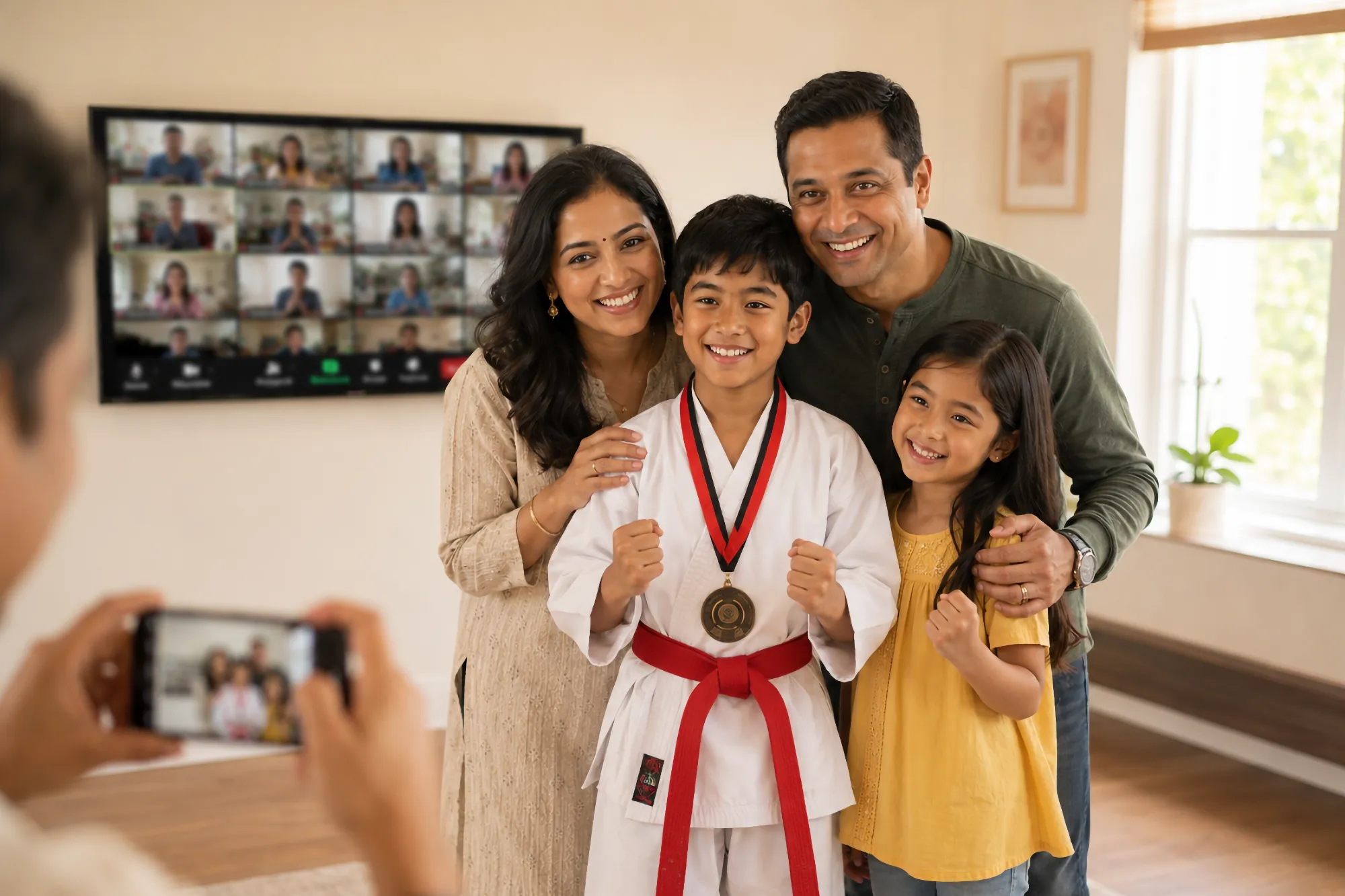
Students see many of the same classmates each week, celebrate belt promotions together, encourage one another during class, and share in the challenges of learning new skills.
At Great Start Karate, students also participate in activities such as Game Day and other extracurricular events, where learning and interaction are combined in a fun and engaging environment. These shared experiences help students get to know one another while building a sense of community that extends beyond a single class.
Real-Time Learning Makes a Difference
Not all online learning experiences are the same.
In online classes, instructors can demonstrate skills, answer questions, provide corrections, and interact with students in real time.
Students are not simply following along with a recording. They are participating in an ongoing learning experience with an instructor who can respond to their needs, provide guidance, and adjust instruction as skills develop.
This ongoing interaction allows instructors to support students through challenges, celebrate progress, and help maintain engagement throughout the learning process.
More Than Convenience
Online karate offers a combination of flexibility, meaningful physical activity, personal guidance, community, and opportunities for regular practice.
While the format may differ from traditional instruction, the underlying goals remain much the same: helping children improve physical abilities, build confidence, strengthen important life skills, work through challenges, and experience the satisfaction of steady progress.
The setting may be online, but many traditions long associated with martial arts remain unchanged. Respect, perseverance, self-discipline, and personal growth continue to be important parts of the learning experience.
For many families, these qualities have made online karate a valuable addition to their educational experience.
Explore More
We invite you to explore additional articles in the Explore section of GreatStartKarate.com, where we discuss physical education, life skills, confidence, and the experiences that help children grow into capable, confident learners.